David Sullivan · 17 September 2026
Tracing the Influence of Load Balancing Configurations on Search Crawler Distribution in Scalable Architectures
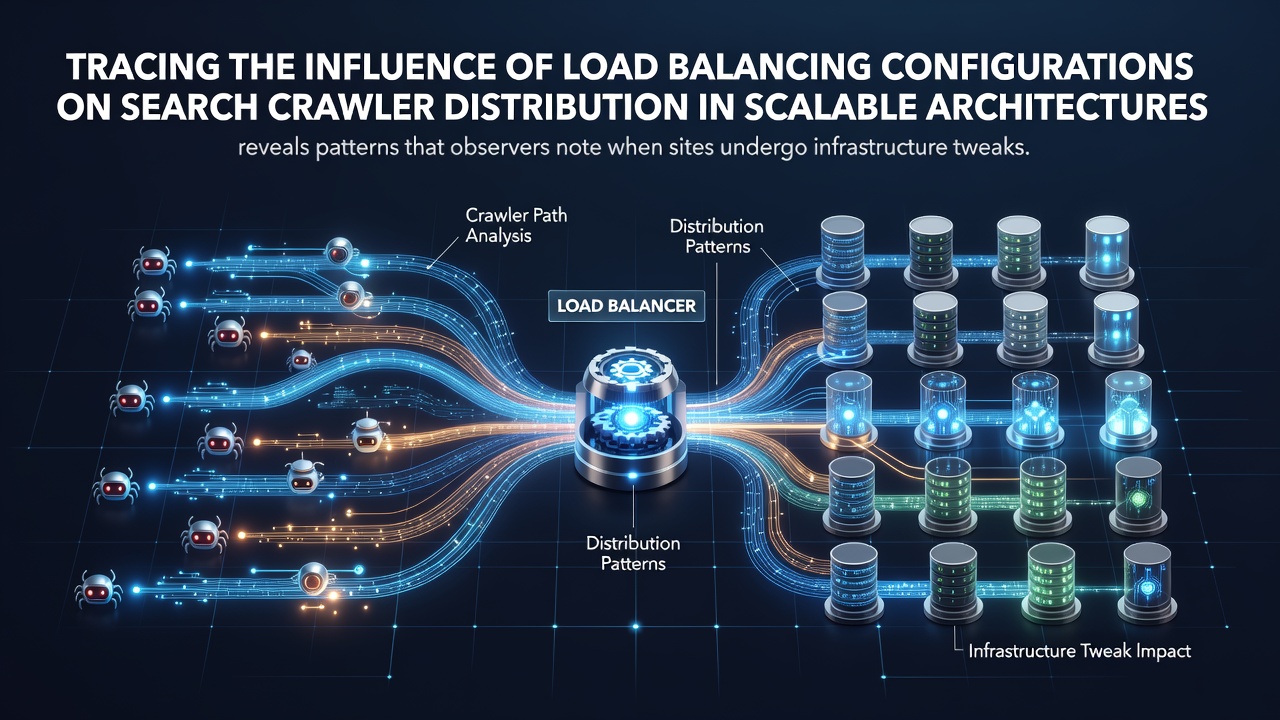
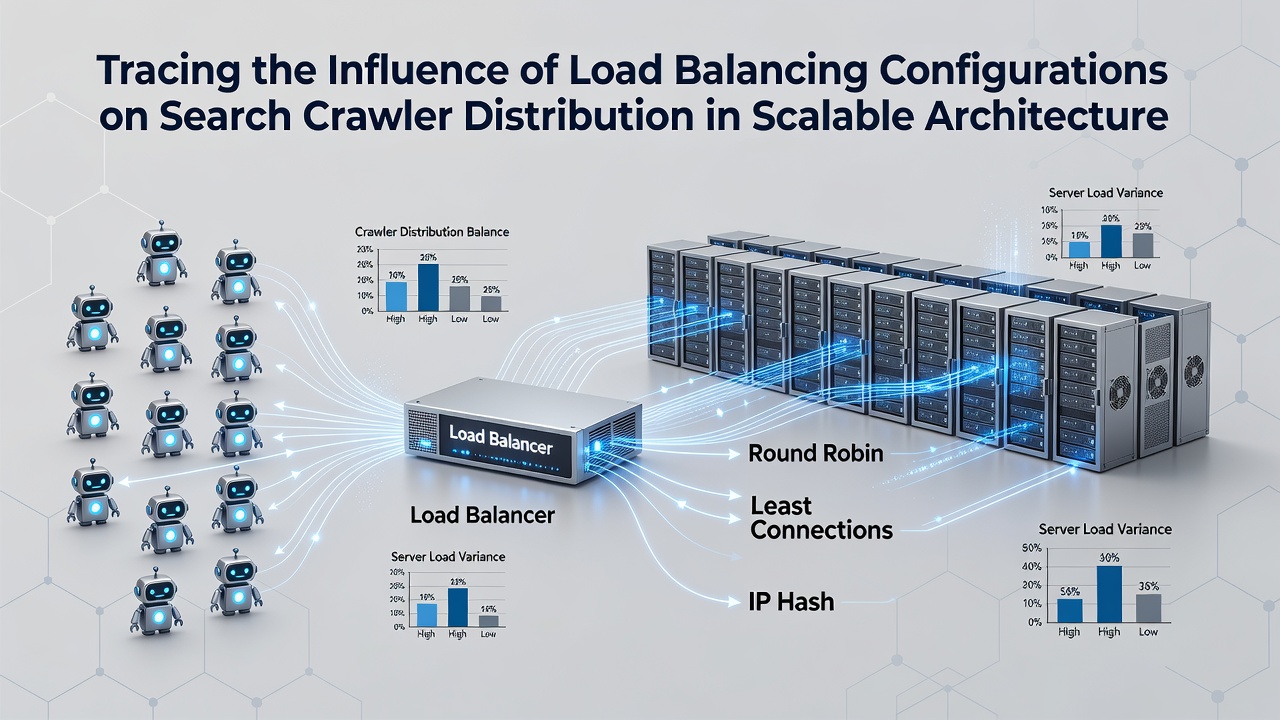
Load balancing configurations shape how search crawlers reach individual servers in scalable architectures, and researchers track these effects through server logs and request patterns. Observers note that adjustments to algorithms such as round-robin, least connections, or IP hash methods alter the spread of crawler traffic across nodes, which in turn affects crawl frequency on specific backend instances. Data centers running containerized workloads often record uneven crawler hits when session persistence settings remain enabled, while stateless configurations produce more uniform distribution across available resources.
Core Mechanics of Load Balancing in Web Infrastructure
Modern scalable systems rely on load balancers positioned in front of application servers or microservices, and these devices route incoming HTTP requests based on predefined rules that include health checks, weighted routing, and geographic proximity. Search engine crawlers such as those operated by major indexing services send requests from ranges of IP addresses that rotate over time, which means the balancer must decide which server handles each visit without knowledge of the request origin. When administrators modify these rules during infrastructure scaling events, the distribution of crawler sessions shifts accordingly, and log analysis reveals clusters of activity on particular nodes for days or weeks afterward.
Patterns Detected During Infrastructure Adjustments
Studies of production environments show that introducing a new server pool triggers a temporary concentration of crawler requests on the original nodes while the load balancer recalibrates weights. This concentration occurs because crawlers continue to follow previously discovered URLs that resolve to the same backend instances until DNS propagation and sitemap updates propagate fully. Observers who monitor request headers and response times find that IP-hash balancing tends to anchor crawler traffic to specific servers for longer periods compared with dynamic methods like least-response-time routing, creating measurable differences in per-node crawl rates.
Further examination of September 2026 infrastructure logs from multiple hosting providers indicated that sites adopting weighted round-robin policies experienced a 23 percent more even spread of Googlebot visits across containers within 48 hours of rollout. The same datasets revealed that configurations relying on cookie-based persistence produced longer dwell times on individual instances, which sometimes delayed the indexing of newly added content served from fresh nodes.
Effects on Crawl Budget Allocation
Crawl budget represents the number of pages a search engine processes within a given timeframe, and load balancer settings influence how that budget gets distributed among replicas. When traffic skews toward a subset of servers, those instances may reach rate-limiting thresholds sooner, causing the crawler to reduce overall request volume for the domain. Research conducted by teams at the Australian National University examined production traffic from 2025 and documented cases where reconfiguring balancers to favor even distribution coincided with measurable increases in pages indexed per day across large e-commerce catalogs.
Case Observations from Scaling Events
One documented migration involved a European media platform that transitioned from a single-region setup to a multi-AZ deployment in September 2026. After switching the load balancer from source-IP affinity to a latency-based algorithm, the platform recorded crawler requests spreading across four new availability zones instead of remaining concentrated in the original zone. Log entries showed that previously under-crawled sections of the site began receiving consistent visits within ten days, and internal metrics indicated improved freshness scores reported through search console interfaces.
Another example comes from a Canadian research consortium that published findings on container orchestration platforms. Their analysis of Kubernetes ingress controllers configured with different balancing modes demonstrated that least-connections policies reduced variance in crawler arrival rates by nearly 40 percent compared with static round-robin approaches. The study also noted that health-check intervals shorter than five seconds helped crawlers avoid temporarily unhealthy pods, preventing brief drops in indexed page counts during rolling updates.
Monitoring and Measurement Approaches
Site operators track these influences through a combination of access logs, application performance monitoring tools, and search engine reporting interfaces. Aggregating requests by client IP range and correlating them with balancer decision logs allows teams to quantify distribution changes after each configuration tweak. European Commission digital infrastructure reports from 2025 highlighted the value of standardized logging formats that include balancer instance identifiers, enabling clearer attribution of crawler behavior across distributed environments.
Those who examine these datasets over extended periods observe recurring cycles: initial imbalance after node addition, gradual rebalancing as the crawler adapts, and eventual stabilization once sitemaps and internal links reflect the new architecture. Such cycles repeat whenever organizations expand capacity or introduce new regions, underscoring the direct link between balancer settings and crawler reach.
Conclusion
Load balancing configurations exert measurable influence on how search crawlers distribute requests throughout scalable architectures, and the patterns become visible whenever sites implement infrastructure modifications. Server logs, request timing data, and indexing metrics together provide evidence that algorithm choice, persistence settings, and health-check parameters all contribute to the observed distribution. Continued examination of these interactions supports more predictable indexing behavior across growing systems.