David Sullivan · 15 October 2026
Mapping Visitor Pathways Through Dynamic Content Routing in Evolving Web Infrastructures
Web infrastructures continue to shift as organizations adopt layered architectures that adjust content delivery in real time, and researchers track how these adjustments influence the routes users take through sites and applications. Dynamic content routing relies on algorithms that evaluate visitor signals such as device type, location, and prior interactions to select which content blocks appear next. Those who study these systems note that the process creates pathways that change with each new request rather than following fixed navigation trees.
Core Mechanisms Behind Dynamic Routing
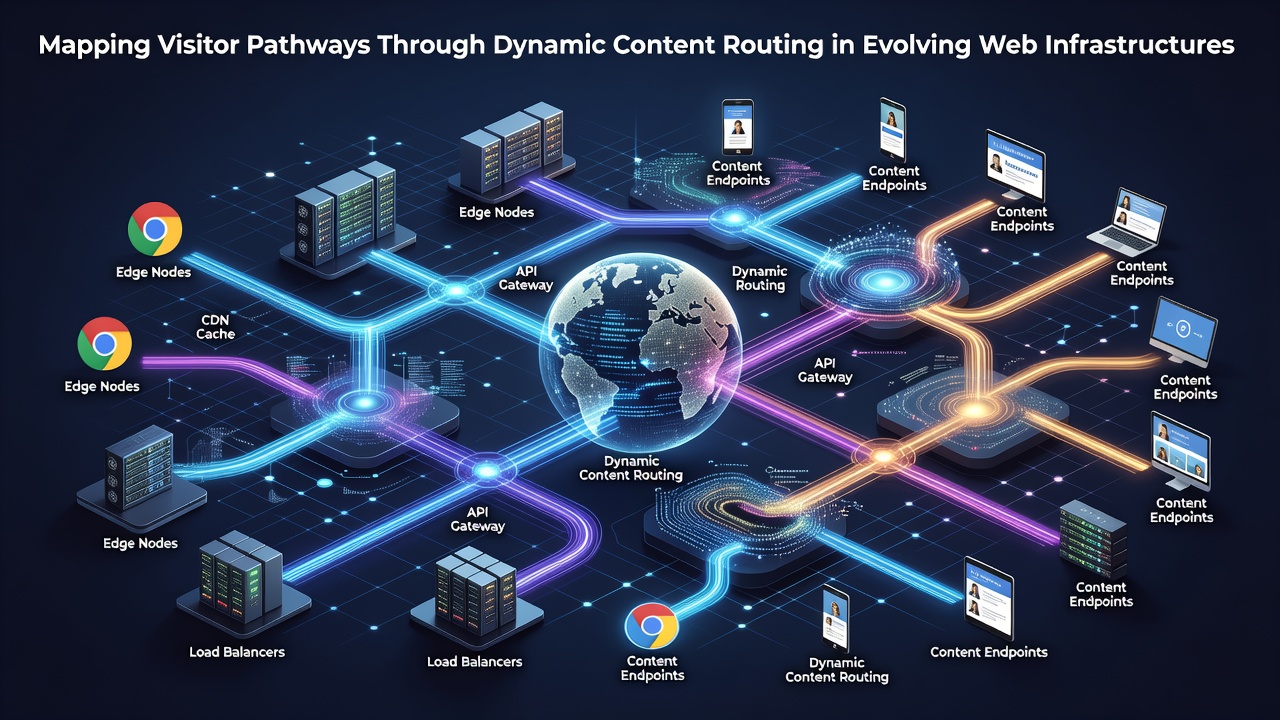
Engineers implement routing rules through edge servers and content delivery networks that evaluate headers, cookies, and behavioral data before serving responses. A single page load may pull elements from multiple origin points while the routing layer decides which variant matches the current visitor profile. Data from infrastructure monitoring tools shows that these decisions occur within milliseconds, yet the cumulative effect across thousands of sessions produces distinct traffic patterns that differ from static site structures.
Observers note that integration with API gateways allows routing decisions to incorporate live inventory or personalization scores, and this capability expands when organizations deploy containerized services that scale independently. Studies conducted by European research institutions reveal that organizations using such gateways report measurable shifts in session depth because users encounter content sequences tailored to their immediate context.
Techniques for Mapping Resulting Pathways
Analysts reconstruct visitor pathways by combining server logs with client-side event streams that record each content block delivered through the routing layer. Heatmaps and session replay tools aggregate these events into graphs where nodes represent content modules and edges indicate transition frequencies. Research indicates that graph-based visualizations help teams identify bottlenecks where routing rules unintentionally steer large user segments away from key sections.
October 2026 brought new open-source libraries that standardize the export of routing metadata into common analytics formats, and teams at North American universities began testing these libraries against production traffic samples. The libraries attach identifiers to each routed element so downstream systems can attribute engagement metrics directly to specific routing decisions rather than to page URLs alone.
Infrastructure Evolution and Its Effects
As organizations migrate from monolithic applications to microservices and serverless functions, the number of possible routing decision points multiplies. Each service boundary introduces new variables such as latency thresholds and failover policies that can reroute traffic without explicit user action. Figures from industry reports compiled by Australian digital infrastructure groups show that organizations completing these migrations experience an average 18 percent increase in unique pathway variants within the first six months.
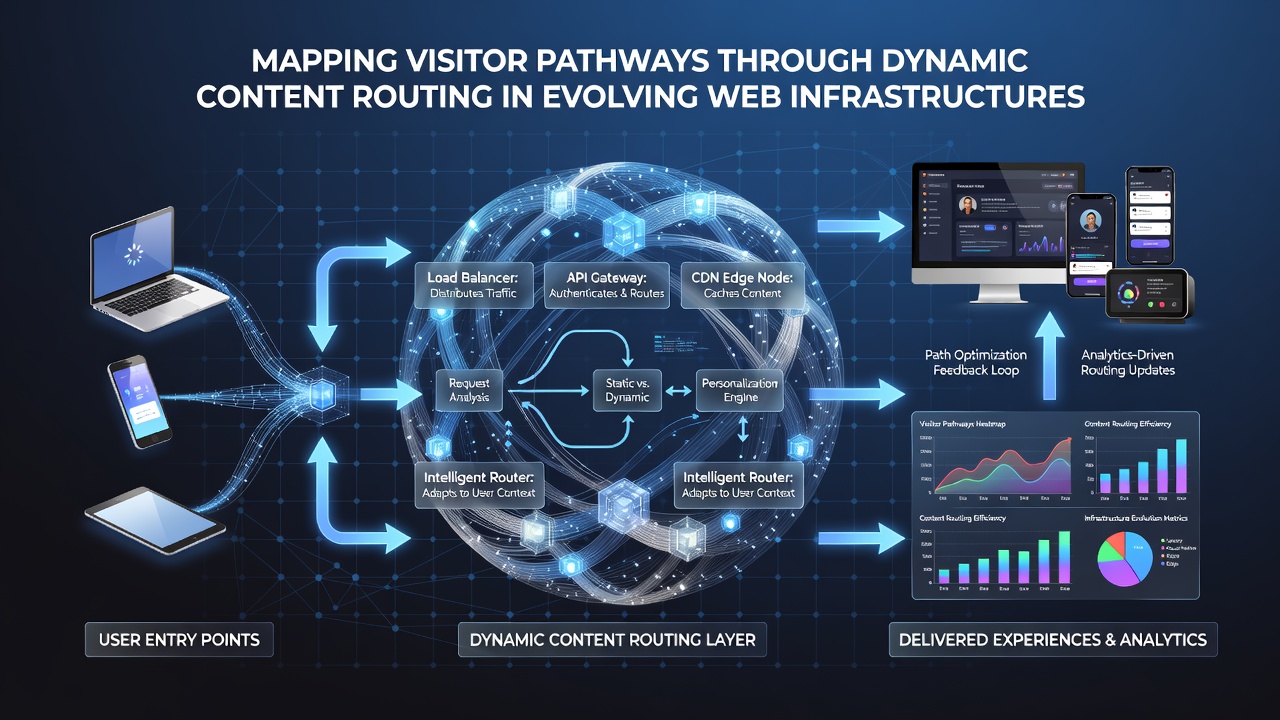
Those who maintain large-scale systems observe that caching layers must now account for routing context in addition to URL parameters, otherwise stale content reaches users who should receive updated variants. Cache invalidation strategies therefore incorporate signals from the routing engine so that changes in personalization rules propagate consistently across edge nodes.
Data Sources and Measurement Standards
Standardized measurement frameworks help compare pathways across different infrastructure setups. A guideline document issued by the National Institute of Standards and Technology outlines metrics for tracking routing-induced path changes while preserving user privacy. Complementary work from Canadian academic consortia provides open datasets that researchers use to benchmark new mapping algorithms against historical traffic patterns.
Teams apply these datasets to train models that predict how proposed routing rule changes will redistribute visitor flows before deployment. Validation occurs through controlled A/B tests that isolate routing variables from other site modifications, and results feed back into rule refinement cycles that operate on weekly or monthly schedules depending on traffic volume.
Conclusion
Mapping visitor pathways through dynamic content routing requires continuous collection of routing metadata alongside traditional analytics signals. Organizations that maintain clear attribution between routing decisions and observed paths gain visibility into how infrastructure updates reshape user navigation. As web systems evolve further, the same measurement practices support both performance optimization and compliance with emerging data governance requirements across multiple jurisdictions.