Ben Becker · 12 November 2026
Decoding Oscillating Data Pathways and Their Effects on Resource Allocation During Peak Traffic Shifts in Cloud Platforms
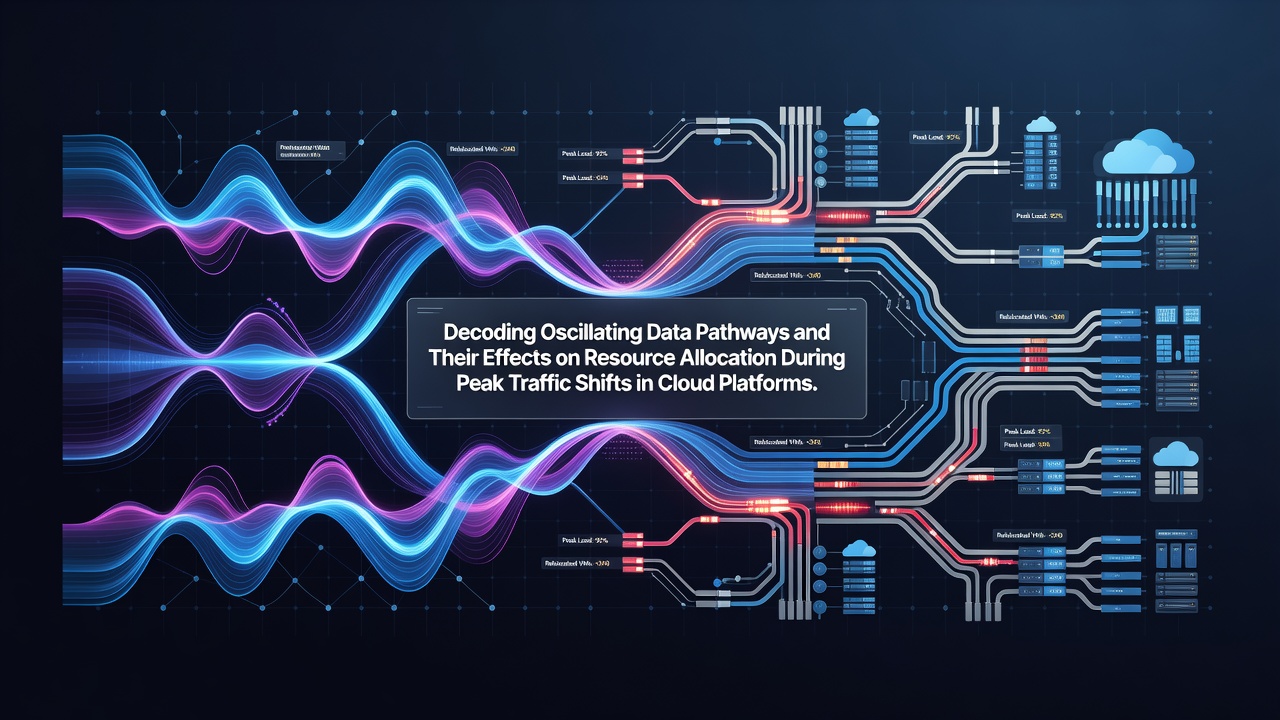
Cloud platforms manage data movement through networks that adjust routes based on real-time conditions, and oscillating data pathways emerge when traffic volumes cause repeated shifts in packet routing across multiple nodes. These pathways create variable latency and bandwidth usage that directly influence how resources get assigned to handle incoming requests. Researchers have tracked these patterns in large-scale environments where traffic spikes occur without warning, forcing systems to reallocate compute instances and storage on the fly.
Core Characteristics of Oscillating Pathways
Data pathways oscillate when load balancers detect congestion and redirect flows to alternate servers, which in turn triggers feedback loops that alter routing tables repeatedly over short intervals. Studies from academic institutions show these oscillations intensify during peak periods because each reroute changes the load distribution, prompting further adjustments in adjacent network segments. Observers note that such behavior differs from steady-state traffic, where pathways remain consistent for longer durations and allow predictable scaling decisions.
Traffic Shift Patterns in November 2026
By November 2026 monitoring systems deployed across major providers recorded heightened oscillation frequencies during global events that drove sudden user surges, such as product launches and regional outages elsewhere. Data indicates these shifts concentrated between 8 PM and midnight UTC, aligning with overlapping business hours in multiple continents. Resource allocation engines responded by spinning up additional virtual machines in secondary regions, yet the oscillating nature of pathways sometimes delayed effective utilization of those new instances.
Resource Allocation Mechanisms Under Pressure
Auto-scaling groups rely on metrics like CPU utilization and queue depth to decide when to provision more capacity, yet oscillating pathways introduce noise into those metrics because traffic arrives unevenly across nodes. Engineers at research facilities have documented cases where temporary spikes in one pathway segment caused premature scaling events that later proved unnecessary once routes stabilized. This leads to over-provisioning in some zones while others remain underutilized until the next oscillation cycle corrects the imbalance.
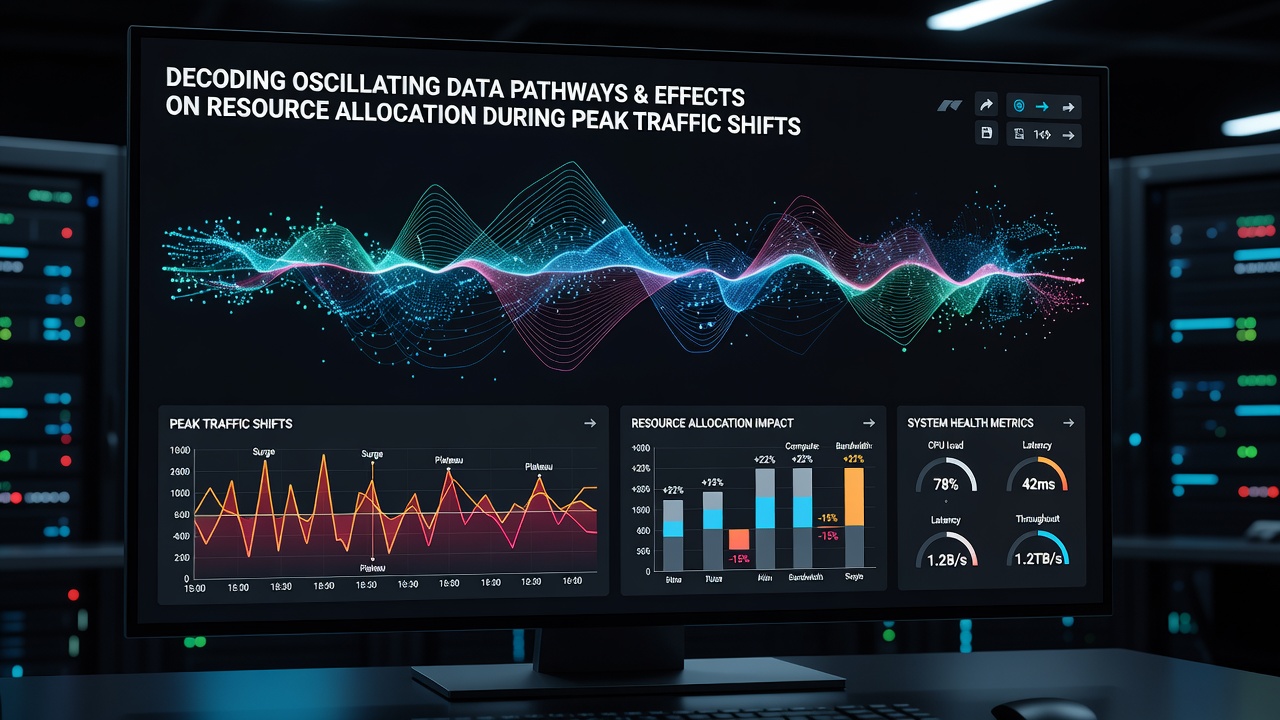
Allocation policies that incorporate pathway stability scores rather than raw traffic volume have shown improved efficiency in controlled tests conducted by university labs. These policies evaluate the frequency of route changes over rolling windows and apply dampening factors before triggering instance launches. Evidence from such experiments reveals reduced instance churn without sacrificing response times during sustained peaks.
Observed Effects Across Different Architectures
Multi-region deployments experience more pronounced oscillations because inter-region links introduce additional variables such as latency jitter and peering policy changes. Reports compiled by the National Institute of Standards and Technology highlight how these factors compound when traffic crosses regulatory boundaries with differing data residency rules. In contrast, single-region setups with dense interconnect fabrics tend to contain oscillations within fewer hops, allowing allocation systems to converge faster on stable configurations.
Container orchestration platforms add another layer because pod scheduling decisions interact with network routing changes. When an oscillating pathway moves traffic away from a pod shortly after deployment, the scheduler may interpret the drop as underutilization and migrate workloads unnecessarily. Field data gathered from production clusters demonstrates that integrating network telemetry into scheduling logic mitigates many of these false migrations.
Monitoring and Prediction Approaches
Telemetry pipelines that sample routing tables at sub-second intervals provide the granularity needed to distinguish genuine oscillations from measurement artifacts. NIST guidelines on cloud monitoring emphasize the value of correlating route data with application-level performance counters. Teams that adopted these correlations reported faster identification of allocation thresholds that actually correspond to sustained demand rather than transient pathway behavior.
Machine learning models trained on historical oscillation traces have begun to forecast peak shift durations with increasing accuracy. One study released by an Australian research consortium found that incorporating geographic traffic origin data improved prediction windows from minutes to tens of minutes, giving allocation systems more lead time to pre-warm resources in the correct availability zones.
Conclusion
Decoding oscillating data pathways requires continuous observation of routing dynamics alongside traditional resource metrics. Platforms that integrate pathway stability into allocation logic demonstrate measurable reductions in unnecessary scaling actions during peak traffic shifts. Continued refinement of monitoring techniques and predictive models will likely shape how cloud providers maintain efficient resource distribution as traffic patterns grow more complex through 2026 and beyond.